Finding a web scraping API that removes proxy headaches, adapts to site changes, and scales without unpredictable costs blocks data teams. Many solutions leave you managing proxies, tuning anti-bot rules, or wrestling with unclear usage pricing. This list compares billing models, AI-driven extraction, and integration depth so developers and data teams can pick a replacement that matches their technical and budget needs.
Table of Contents
Pros
Open source code and a self-hosted friendly design let engineering teams audit the retrieval layer and fork or extend it when needed.
zenrows.com
At a Glance
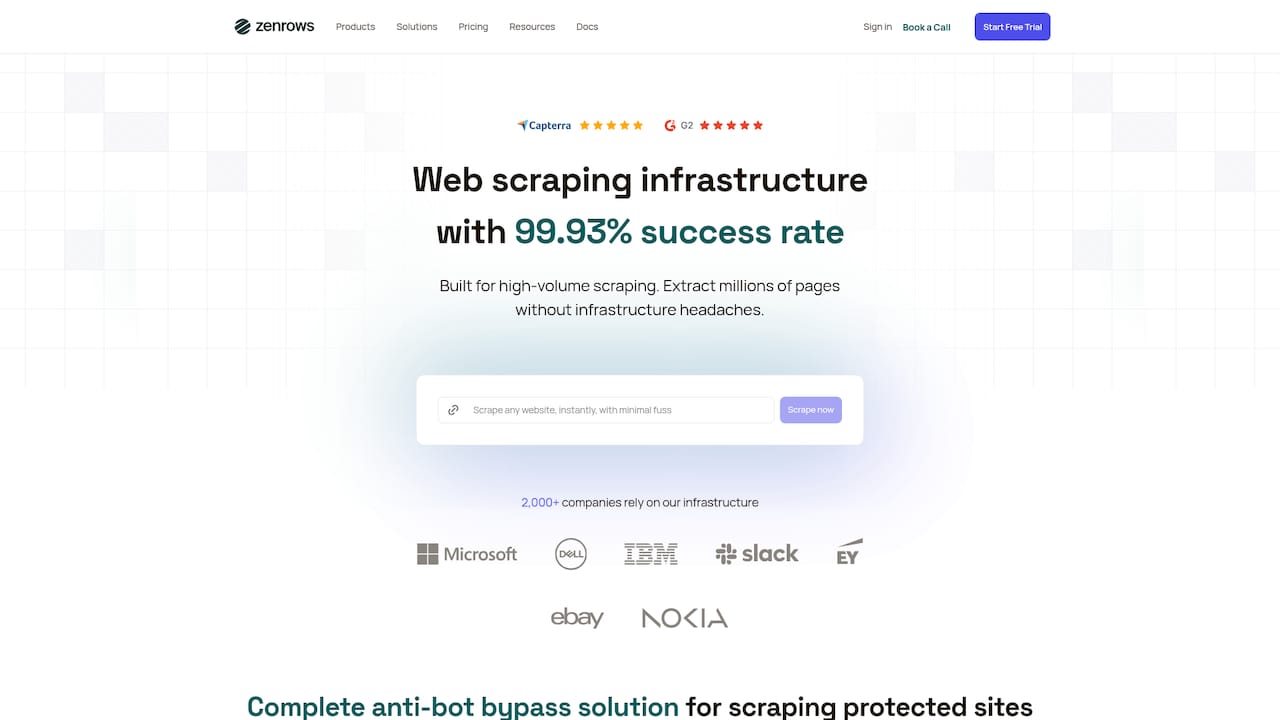
The site centers on diagnostic guides for bypassing Cloudflare challenge pages. It hosts API references and SDK material targeted at challenge loops, client side errors, and private access tokens. Content reads like a technical knowledge base rather than a commercial product catalog.
Core Features
A structured documentation index catalogs challenge solutions and troubleshooting steps for verification flows. The site supplies API references, SDK guidance, and practical guides for environment configuration and agent setup. It also collects community resources and open source contributions that demonstrate challenge solving in automation workflows.
Key Differentiator
This resource concentrates specifically on challenge handling in security layers such as Cloudflare. The documentation drills into failure modes like challenge loops and client side verification errors rather than general scraping tactics. That focus makes the content detailed and diagnostic, aimed at people who need to debug why automated requests fail under strict bot management.
Pros
The site provides deep, technical troubleshooting guides that map real failure modes to concrete fixes. It offers developer facing materials such as API references and SDK examples that speed integration for teams who write code to respond to challenges. Compatibility notes for multiple browsers and devices help when behavior differs across client environments. Community and support resources let engineers share patterns and workarounds encountered in the field.
Cons
-
The content is highly technical and assumes familiarity with web security and automation, so nontechnical readers will struggle.
-
The site functions as documentation and reference rather than a turnkey product you can purchase or provision.
-
There is no clear pricing, service contract, or product feature list that a buying team can evaluate.
When It May Not Fit
If you need a managed bypass service or a commercial SaaS with support SLAs, this site will not provide that deliverable. Teams that lack in house engineering bandwidth will find the material hard to convert into production workflows. The resource works best as reference material, not as an out of the box scraper or proxy replacement.
Who It's For
Developers and automation engineers who diagnose scraping failures behind bot protection will benefit most. Security engineers investigating CAPTCHA loops and integration engineers wiring SDKs into automation pipelines will find practical examples. Teams that already operate their own proxies and agents can adapt the guides directly.
Real World Use Case
A developer keeps hitting repeated CAPTCHA prompts when extracting price data from a protected site. They use the documentation to identify a client side error pattern, apply the SDK request headers shown in an example, and test with the browser compatibility notes. After adjusting token handling and request timing the extraction run stops triggering the loop.
Website: https://zenrows.com
ScrapeGraphAI
At a Glance
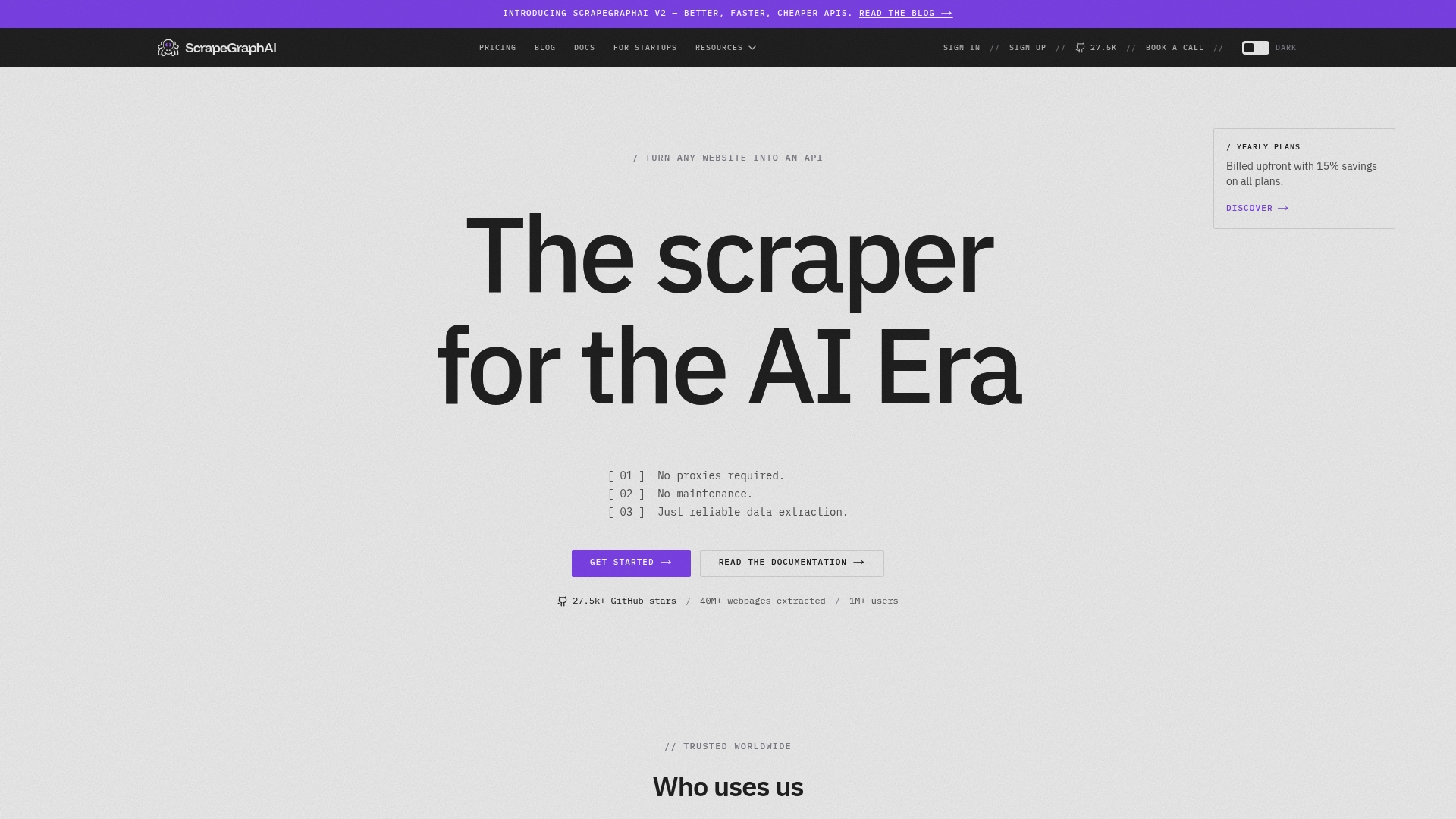
No proxies required for scraping. ScrapeGraphAI routes requests and offers built in proxy rotation while letting you avoid managing proxy fleets. The service also provides a free tier with 500 credits and a starter plan from $20/month.
Core Features
ScrapeGraphAI accepts natural language prompts to extract typed structured data and returns results as markdown, HTML, JSON, or screenshots. The API exposes endpoints for scraping, extracting, searching, crawling, and monitoring, and the platform includes Python, JavaScript, and CLI SDKs for quick integration. Self healing scraping adapts to site changes so pipelines need less manual maintenance.
Key Differentiator
The product centers on natural language driven extraction that adapts automatically to page structure changes. That approach cuts time spent writing and updating CSS or XPath selectors. Teams that want prompt based extraction rather than selector driven tools will find this model the defining feature.
Pros
ScrapeGraphAI reduces maintenance by using AI powered prompts and self healing logic to handle common site breakages. Extensive SDK support covers Python, JavaScript, and CLI workflows, and integrations with orchestration tools accelerate automation. The platform markets a credit based billing model that simplifies cost forecasting and lets you start on a free plan. Fast setup is a repeated vendor claim and often reported as minimal for standard scraping projects.
Cons
-
Credit pricing can become costly at very high volumes, especially for frequent full site crawls.
-
Service behavior depends on the vendor API and AI stability, which could surface rate limits or retries during large scale extraction.
-
Documentation and buyer signals for very large enterprise workflows are less detailed than for general developer use.
When It May Not Fit
If you need predictable per page pricing for millions of pages monthly, credit based billing could be harder to model. Projects that require strict offline proxy ownership or internal-only scraping appliances may find the hosted approach limiting. Very large batch extraction workflows should validate API rate limits and SLA terms before committing.
Notable Integrations
-
Python SDK
-
JavaScript SDK
-
CLI tool
-
MCP server
-
LangChain
-
CrewAI
-
LlamaIndex
-
Agno
Who It's For
Developers, data teams, and startups that prefer prompt driven extraction over selector maintenance will get the most value. The product fits teams that want quick integration via SDKs and those that prioritize minimal operational overhead for ongoing scraping tasks. Enterprises should evaluate scale needs first.
Real World Use Case
A SaaS startup used ScrapeGraphAI to gather product listings from dozens of e commerce sites. The team replaced manual selectors with prompt templates and reduced time spent fixing broken scrapers. Data freshness improved because the extraction adapted when storefront layouts changed.
Pricing
A free tier provides 500 credits for testing. The starter plan begins at $20/month and includes 10,000 credits. Custom enterprise plans are available for higher throughput and bespoke SLA arrangements.
Website: https://scrapegraphai.com
Apify
At a Glance
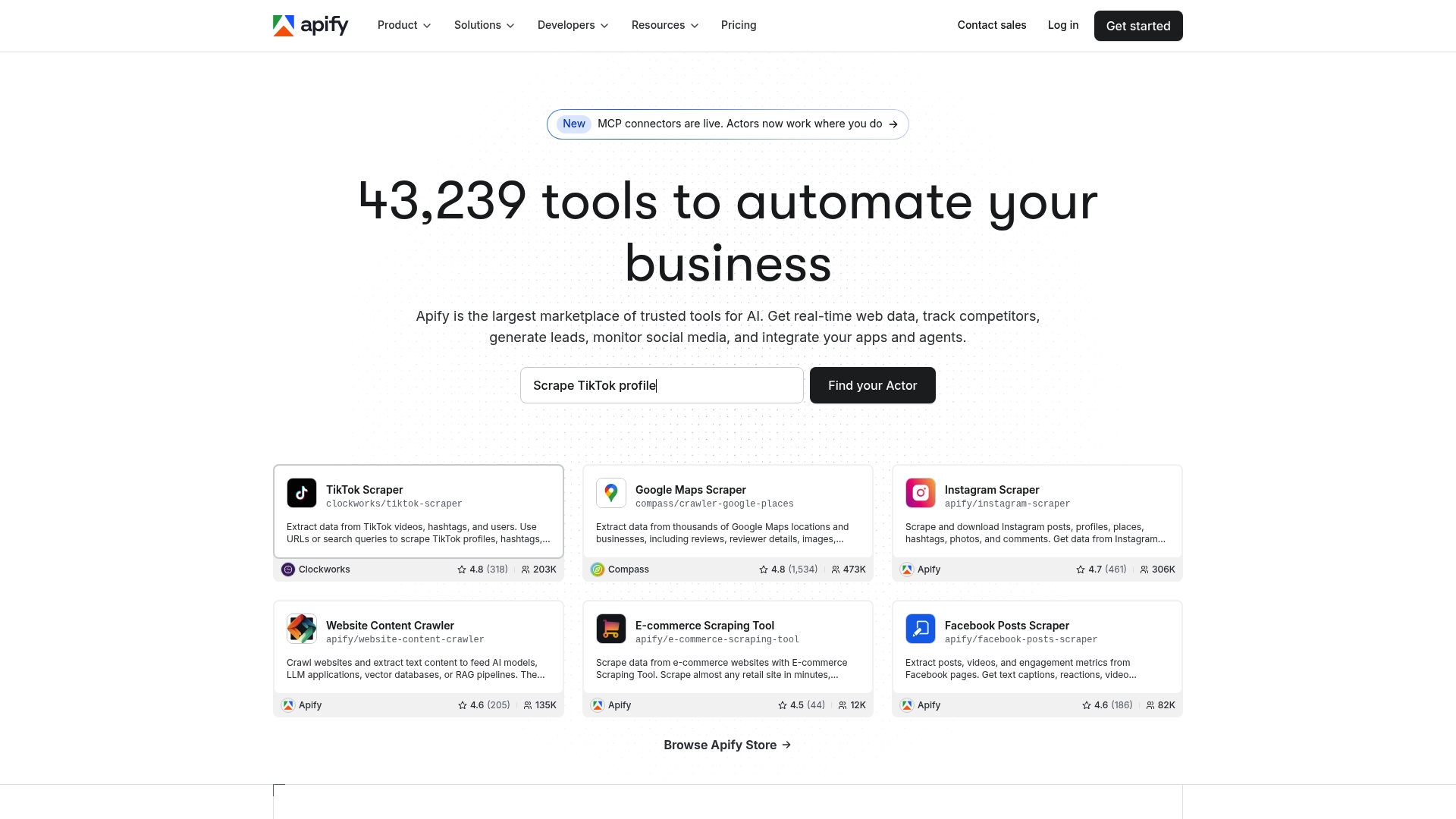
Apify reports a marketplace of over 43,000 trusted tools and Actors for web scraping, automation, and AI data collection. According to the company, it meets GDPR and SOC2 standards. The vendor advertises 99.95% uptime, which supports enterprise usage claims.
Core Features
Apify combines a large actor marketplace with an API for controlling scrapers and automation workflows, plus open source libraries such as Crawlee for custom crawlers. It supports real time web extraction for social media, competitor tracking, lead generation, and AI training data. The platform also offers deployment and management features for high volume scraping.
Key Differentiator
The marketplace scale and the mix of hosted Actors plus open source tooling set Apify apart. That marketplace lets teams adopt ready made Actors for common targets and then extend or replace them with code when needed. This model shortens development time for standard scraping tasks.
Pros
Apify groups many ready made actors so you can assemble a scraping pipeline without building every connector. The platform supports both no code and code based workflows, which helps teams that split work between analysts and developers. That uptime claim and the stated enterprise grade compliance make it practical for production ingestion and AI training pipelines. The open source Crawlee library and detailed guides lower implementation risk when you must customize crawlers.
Cons
- Complexity might overwhelm beginners. Advanced actor composition and scaling require prior scraping or programming knowledge.
- Pricing is usage dependent and not published as fixed plans. Small teams may find it hard to predict monthly costs.
- Free tier exists, but enterprise level features and high volume usage are paid.
When It May Not Fit
If your team lacks engineering capacity, the learning curve will slow delivery. Teams needing clear, fixed monthly pricing will find the usage based model hard to budget for. Organizations that want a managed, fully hands off ingestion service may prefer a vendor that lists fixed tiers and limits.
Notable Integrations
- APIs and an MCP server for programmatic control and hosted connector orchestration.
- Cloud services such as AWS and Google Cloud plus cloud databases for storage and processing.
- Productivity tools including Slack and Google Sheets for notifications and downstream workflows.
Who It's For
Developers, data scientists, and AI teams needing a mix of ready made connectors and programmable scraping engines. Teams that expect to scale scraping workloads and that can allocate engineering time to customize Actors will benefit most. It fits organizations that want both hosted Actors and open source libraries to iterate quickly.
Real World Use Case
A retailer automates product pricing and availability checks across dozens of e commerce sites using hosted Actors to collect pages and Crawlee for site specific parsing. The company streams extracted JSON into a cloud database and alerts price changes to a Slack channel for pricing analysts.
Pricing
Pricing is not listed publicly. The vendor typically offers pay as you go or subscription based models and provides initial free credits for developers. Expect costs to vary with request volume, crawling frequency, and enterprise feature use.
Website: https://apify.com
Zyte Web Scraping API
At a Glance
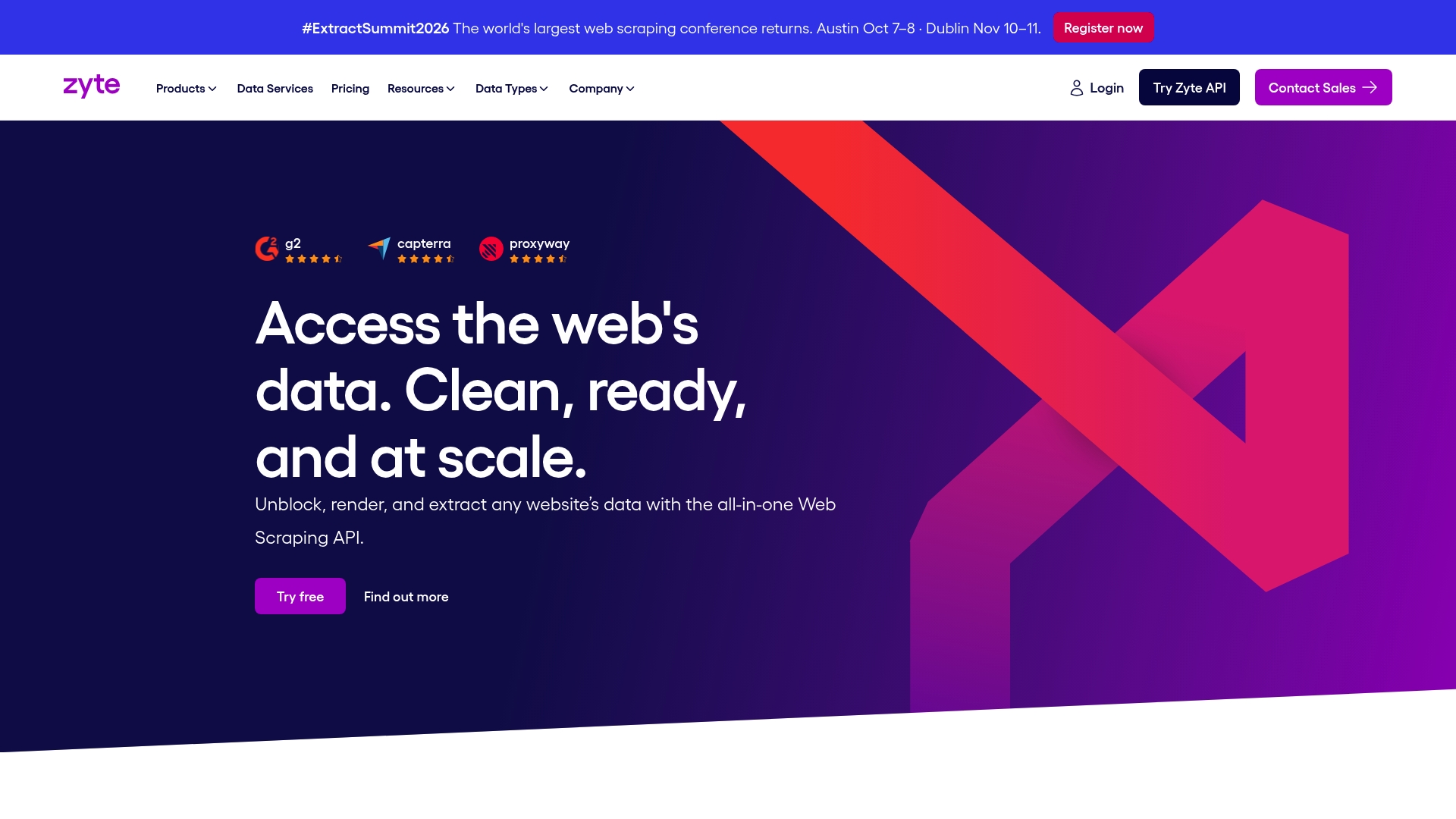
Zyte reports pricing starting from $0.06 per 1,000 successful responses. That starting price positions Zyte as an option for teams that need predictable low-volume runs or tiered scale.
The product pairs browser rendering, anti-bot handling, and a proxy stack with AI extraction and a stated compliance focus. Those pieces aim to reduce engineering time for extraction projects that include complex pages and legal requirements.
Core Features
Zyte combines unblocking and extraction with headless browser automation and an AI layer that returns structured output. The platform also includes multi region IP rotation and offers residential and mobile proxy options inside plans or as dedicated solutions. Built in legal compliance and documentation target teams that must manage risk while scraping at scale.
Key Differentiator
Zyte stands out for combining AI powered automatic data structuring with explicit legal compliance controls and configurable proxy setups. That combination makes it a fit for teams prioritizing defensible, production grade extraction where anti bot handling and auditability matter more than raw speed alone.
Pros
Zyte reduces parser maintenance by returning prestructured data, which shortens integration time and lowers engineering churn. The company emphasizes compliance and documentation, reducing legal friction for regulated use cases. The API surface is broad, covering headless rendering, CAPTCHA solving, geo targeting, and proxy rotation so teams can consolidate multiple tooling needs under one vendor.
Cons
-
Advanced features and high volume plans may add notable cost.
-
Pricing can feel complex for enterprise scale customers.
-
Tuning proxies and anti bot strategies requires technical expertise from developers.
When It May Not Fit
Projects with tight budgets at very high volumes may find total cost higher than lightweight scrapers. Teams that need a zero configuration, plug and play scraper for simple HTML may not need Zyte's full feature set. Organizations without proxy or anti bot expertise will face an initial learning curve to reach peak reliability.
Who It's For
Developers and data teams building reliable, auditable scraping pipelines will get the most value. Legal and compliance teams in enterprises that must document collection practices will also find Zyte aligned with those needs. Startups that need cheap occasional crawls can use the entry tier but should verify total cost projections for growth.
Real World Use Case
A retail analytics company uses Zyte to track thousands of product prices and stock levels across global e commerce sites. Zyte renders pages and solves anti bot challenges so the analytics team receives normalized JSON responses. That workflow lets the company feed price changes into pricing models without maintaining dozens of site specific parsers.
Pricing
Zyte reports pricing from $0.06 per 1,000 successful responses and offers tier based plans with pay as you go billing. The vendor advertises custom enterprise options for large scale contracts and dedicated proxy solutions. Evaluate sample billing runs before committing to an enterprise tier.
Website: https://zyte.com
Comparison of alternatives
Selecting the most appropriate data scraping tool demands assessing flexibility and adaptation to user requirements while recognizing the range of services provided by various options.
Documentation and Customization
Each reviewed system emphasizes its unique strengths. Zenrows.com excels in offering a well-documented diagnostic platform targeting specific access and verification challenges, empowering development teams with guidance on addressing unique failure scenarios. ScrapeGraphAI provides substantial assistance through AI-guided prompt-based data extraction, reducing the requirement for manual input to address structural changes in target websites. Conversely, Apify’s marketplace approach and library access enable teams to balance pre-built solutions with programmable levels of customization. Gyrence.com offers self-host-friendly infrastructure alongside an intuitive interface, catering from beginners to expert integrators.
Operational Considerations
Operational concerns often dictate the choice of tool. For budget-conscious developers, Zyte Web Scraping API’s pay-as-you-go method with clearly outlined costs and multi-use regional proxy functionalities may appear attractive. Apify stands out by providing a marketplace-model platform that combines ready-made tools with open source adaptability, although pricing and advanced workflows may be initially challenging for small-scale teams. Gyrence.com places focus on user implementation ease while allowing scalability and deeper integration, broadening its applicability across roles and expertise levels.
Best fit
- Teams looking for a service with user support and minimal setup requirements should consider Gyrence.com.
- Developers requiring adaptable integration options to support varying scraping workflows may prefer the self-healing scrapers offered by ScrapeGraphAI.
- Groups favoring detailed documentation to address customization and error resolution challenges might find zenrows.com suitable.
- Enterprises focusing on strict compliance standards and scale capabilities could benefit from Zyte Web Scraping API’s legal alignment and structured offerings.
Our pick
Gyrence.com emerges as our preferred option, balancing accessible onboarding mechanisms with customization capabilities crafted to meet the requirements of diverse user profiles effectively. Leveraging its ability for detailed user-focused implementations and flexible adaptability caters especially well to development teams striving for, scalable data ingestion workflows.
Explore the options across various web scraping solutions to determine which best meets the specific needs of your project and team.
| Product | Core Features | Key Differentiator | Pricing | Limitation |
|---|---|---|---|---|
| Gyrence | Comprehensive scraping APIs with advanced features | Integrates seamlessly with existing workflows | Price not published | Specialized training required for optimal configurations |
| ZenRows | API references and SDK material targeted at challenge solutions | Offers dedicated guides for resolving HTTP challenges | Price not published | Content assumes high technical familiarity |
| ScrapeGraphAI | Natural language driven multi-format extraction | Self-healing scraping and natural language prompt extraction | Free tier or plans from $20/month | Credit pricing doesn't scale well for massive volumes |
| Apify | Large marketplace of tools and automation workflows | Mix of no-code workflows and open-source customization | Price not published | Complexity might deter beginners during initial setup |
| Zyte Web Scraping API | AI-powered structured data output with integration | Built-in compliance and diverse proxy handling | From $0.06/1,000 responses | Advanced options may introduce additional costs for large-scale use cases |
Choosing the Right Web Scraping API for Technical Teams
Web scraping projects often face challenges like opaque failure modes, unpredictable billing, and complex integration. This article highlights critical pain points teams confront when evaluating liceron.in alternatives—such as managing proxies, handling anti-bot measures, and ensuring reliable data extraction.
Gyrence addresses these challenges with precise, structured failure modes and clear spending caps. It offers five composable primitives—Search, Traverse, Fetch, Extract, and Map—and a hosted MCP endpoint, all designed for developers and data teams needing reliable AI agent web data. Your scraping bill does not surprise you. Every response is typed and discriminated, so your automation can respond intelligently to each step.
See how Gyrence’s structured data extraction API fits development pipelines and try the API console to compare performance firsthand. Visit Gyrence to evaluate a transparent alternative tailored for your scale and precision requirements.
FAQ
How does Gyrence handle changes in website structures during scraping?
Gyrence utilizes self-healing scraping technology to adapt automatically to changes in website structures. This reduces the need for manual updates and minimizes downtime, allowing for smoother and more efficient extraction processes. Teams should expect less maintenance effort and more reliable data flows.
What is the difference between ScrapeGraphAI and Gyrence?
ScrapeGraphAI excels with its natural language prompts for extraction and automatic adaptation to page changes, making it ideal for teams that prioritize quick setup without extensive selector maintenance. Gyrence, in contrast, offers structured data retrieval with an emphasis on intricate strategies for narrow scraping scenarios that involve anti-bot challenges. Consider Gyrence if your main concern is handling bots effectively.
Which web scraping API provides extensive SDK support for developers?
Gyrence has extensive SDK support that includes Python and JavaScript, which facilitates integration for developers. This enables rapid onboarding for automation projects, simplifying the adoption process within engineering teams. Teams can anticipate a smoother setup experience with these tools.
Does Zyte support legal compliance while web scraping?
Zyte emphasizes its legal compliance as a priority, making it suitable for teams in regulated industries. It provides resources on managing legal risks during data collection, which is essential for enterprises needing to adhere to strict rules. For organizations just starting out, Gyrence serves as a lower-commitment option with a focus on flexible integration and the ability to scale as legal needs arise.
How does Apify support high-volume scraping tasks?
Apify combines a marketplace of ready-made Actors with its API to streamline high-volume scraping tasks, allowing teams to automate complex workflows efficiently. This makes it a strong candidate for enterprises needing thorough automation solutions. Gyrence can be a complementary alternative for targeted situations where precise configuration is necessary.